Dental caries as a reflection of systemic inflammation
Modern biological dentistry no longer treats cavities merely as "tooth decay", but as an infectious and systemic inflammatory process whose roots extend deep into the regulation of the organism's immune system and metabolism.
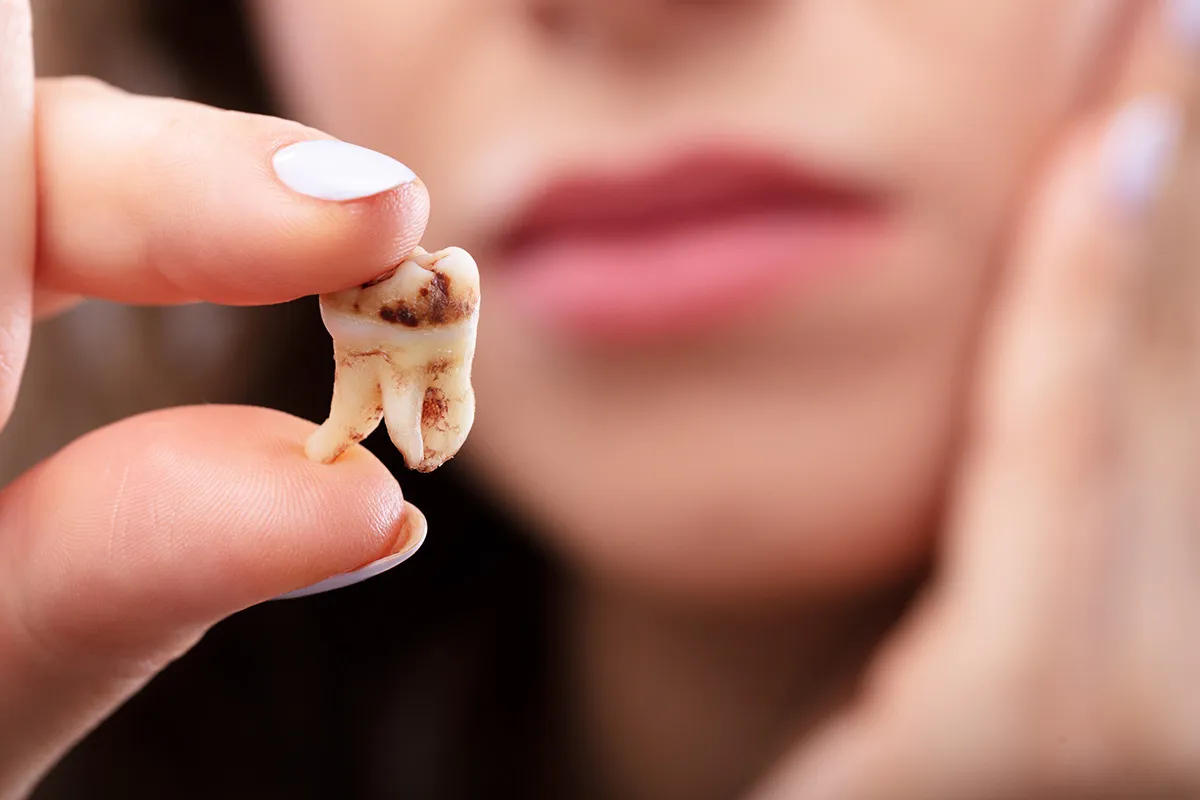
1. The Nature of decay
Dental decay occurs as a result of the interaction between dental tissues, bacteria, diet, salivary composition, and the host organism's resistance.
Bacteria such as Streptococcus mutans and Lactobacillus spp. produce organic acids that demineralize enamel and dentin.
When the surface of the tooth can no longer restore its mineral balance, microscopic damage occurs, and an inflammatory process begins there.
Modern studies indicate that inflammatory mediators and immune responses are activated even in early decay.
At the cellular level, the following are triggered:
• aMMP-8 (activated matrix metalloproteinase-8), which breaks down collagen and connective tissue;
• IL-6 and TNF-α, which spread through the blood and may increase systemic inflammation levels;
• CRP (C-reactive protein), a marker of systemic inflammation produced in the liver.
2. Systemic Effects
When chronic inflammation occurs inside the tooth or in the gum area, it does not remain localized.
Through the circulatory and lymphatic systems, inflammatory mediators can spread throughout the organism.
The result is a low-level chronic systemic inflammation, considered one of the major risk factors for the following diseases:
• Cardiovascular diseases
• Type II diabetes and metabolic syndrome
• Neurodegenerative diseases (Alzheimer's disease)
• Arthritis and autoimmune diseases
Studies (Saraç F., 2025; AlShammari, 2024; Guo et al., 2024)
have confirmed that untreated dental caries is associated with a higher systemic inflammation index (SII) – a laboratory marker calculated based on the ratio of neutrophils, platelets, and lymphocytes.
Children with untreated caries showed an SII value of 384 ±186 compared to healthy children’s 294 ±139 (p = 0.02, which is significant).
3. Clinical Interpretation
A biological dentist views every cavity as a potential site of inflammation that can weaken the overall balance of the body.
This is a real systemic connection supported by both immunological and biochemical data.
Therefore, it is important to:
• detect caries at an early stage (fluorescence diagnostics, laser scanning, CBCT, aMMP-8 tests);
• remove sources of inflammation minimally invasively;
• repair the structure of the tooth with biologically compatible materials;
• balance diet and salivary pH, as remineralization begins with chemical harmony.
4. Biological Perspective
The approach to caries is not just a chemical or mechanical issue, but it is biological and energetic.
A tooth is not a lifeless mineral object but a living structure whose roots interact with the vascular and nervous systems.
When inflammation occurs inside the tooth, it signals the entire body that balance has been lost.
The goal of biological dentistry is not merely to fill a tooth but to reduce the body’s inflammatory load and restore natural balance.
5. Laboratory Markers and Diagnostics
Modern systemic oral diagnostics allow monitoring the effects of inflammation on the body before symptoms appear.
Markers used:
Marker Indicates Clinical Significance
aMMP-8 active collagen degradation early inflammation and tissue damage
CRP systemic inflammation associated with the risk of heart disease
IL-6, TNF-α the level of cytokines intensity of chronic inflammation
SII systemic inflammation index overall immune system load
Summary and Message
Dental caries is not just an oral issue.
It is the body's inflammatory response to the loss of balance, influenced by diet, immunity, microflora, and stress.
"Caries is not just a cavity – it is infectious and systemic inflammation.
We have been engaged in atraumatic dentistry for over 30 years. The treatment methods, technologies, and diagnostic options we use, along with the best materials, allow the entire body to heal."
Dr. Meeme Luks
Holistic Dentist, CityMed Clinic
Caries = systemic inflammation
aMMP-8 / CRP ↑